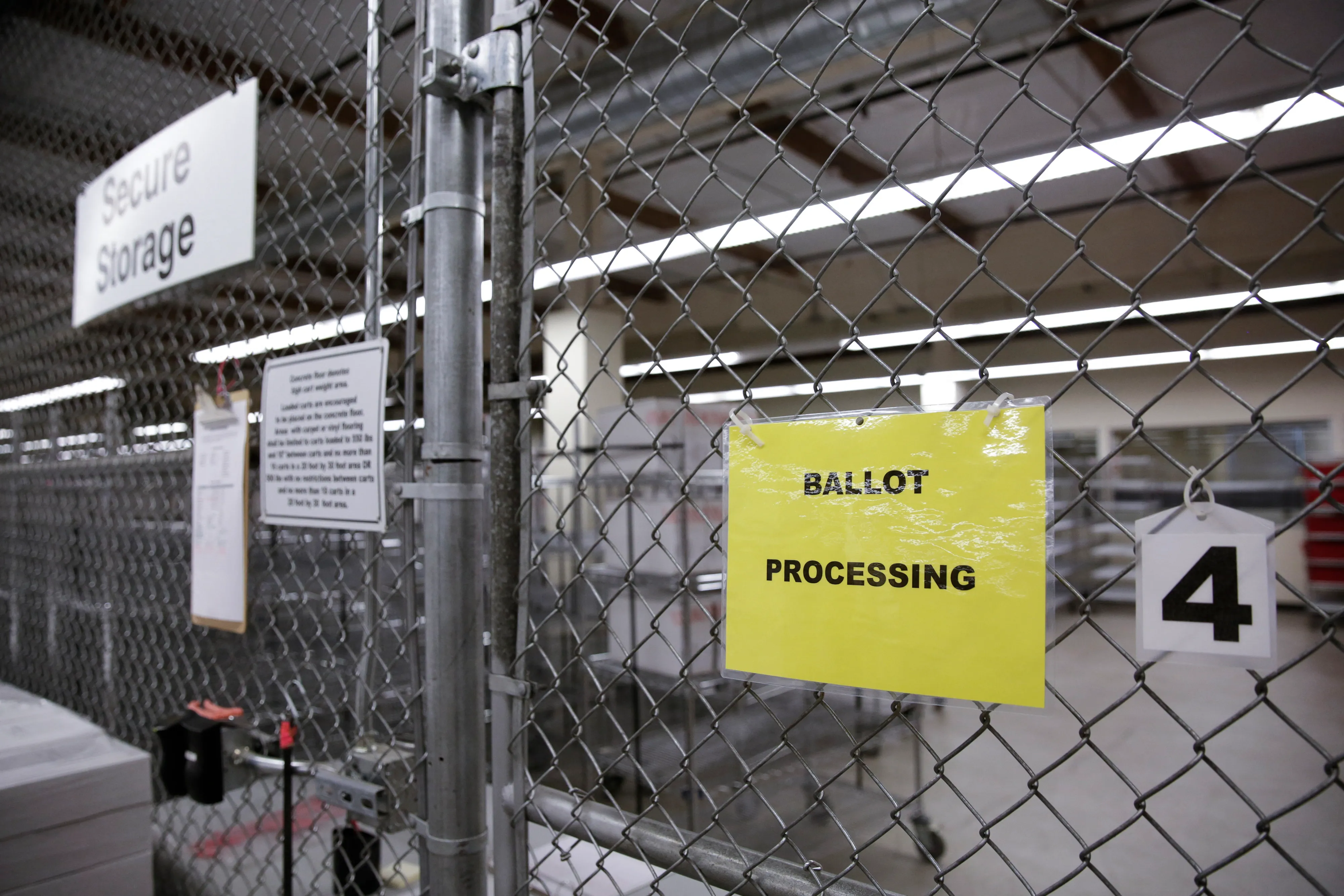
The Trump administration’s abrupt firing of Election Assistance Commission commissioners has created new legal peril for officials who run, administer, and secure elections. The EAC is an obscure but important agency that oversees testing and standards for voting machines, including around security.
EAC Firings and Federal Support
On July 10, Democratic Commissioners Ben Hovland and Thomas Hicks were fired by the White House, while reports indicate that a third Commissioner, Republican Christy McCormick, resigned. This move has raised concerns among election officials, with Hovland stating that the firings would further erode trust in the commission's bipartisan nature.
In an interview with NPR, Hovland said,
“And as you eliminate things – or if you get rid of commissioners, for example – or as you eliminate some of these other sort of safeguards or norms, it certainly strains the system,”and that it
“certainly also likely causes people to lose faith in our democracy and in the process and their confidence in our elections. And that’s very concerning.”
DOJ Warning and State Response
A letter sent by the DOJ to all 50 states warned that the department will investigate and prosecute any election official who knowingly retains non-citizens on the state’s voter registration list or facilitates non-citizens in receiving and casting ballots. This warning has been met with concern from Secretaries of State, with some stating that the number one threat facing elections in their state is not from a foreign country or AI, but their own federal government.
Tobias Read, the Democratic Secretary of State for Oregon, stated that his office is focused on providing the state’s 36 county clerks with the resources and support they need to carry out a smooth election. However, he acknowledged that his office is “playing defense in a lot of ways [from] the intrusion from the federal government” that continues to assert its authority over local elections.
State-Level Election Security Efforts
Several counties in Oregon will offer voters access to a new ballot tracking system that provides text or email updates when a voter’s ballot is moving through mail and has been certified. Reed estimated the cost at “pennies per voter per election” and called it a good option for cash-strapped counties to assure voters their ballots are secure and properly tracked.
Adrian Fontes, Arizona’s Secretary of State, stated that his office is focused on primary elections and processing the mail ballots that have been arriving. After Iranian hackers defaced Arizona’s candidate bio portal last year, Fontes moved to fill a widening gap: the Trump administration’s withdrawal of federal foreign interference training and support.
Fontes' office is now directly supporting local jurisdictions on election security while coordinating more closely with state law enforcement, intelligence agencies, and other states. However, this is being done with a fraction of the resources and coordination that the federal government brought to bear under both the Biden and first Trump administrations.
Lack of Trust and Federal Support
Fontes stated that he maintains positive personal relationships within the Department of Homeland Security, but his office does not have a formal relationship with CISA. He said that even if CISA offered such services today, he wouldn’t accept it, citing the lack of trust between states and the Trump administration.
Fontes stated,
“They have proven through their actions that they don’t want to be effective partners in protecting the American electorate and protecting American voters,”and that
“Because of that, the clear answer, the only sensible answer for someone like me, would be to say ‘No, I don’t want the help of people I cannot trust.’ People who have demonstrably and explicitly threatened me and local election administrators of all political stripes with criminal prosecution.”
Secretaries of State in Colorado, Nevada, Minnesota, Rhode Island, and others have also called the DOJ letters an attempt at federal intimidation of election officials. Some have reiterated their refusal to hand over state voter data, with a federal judge upholding their right to do so.
Source: CyberScoop