Introduction to Anthropic's Mythos
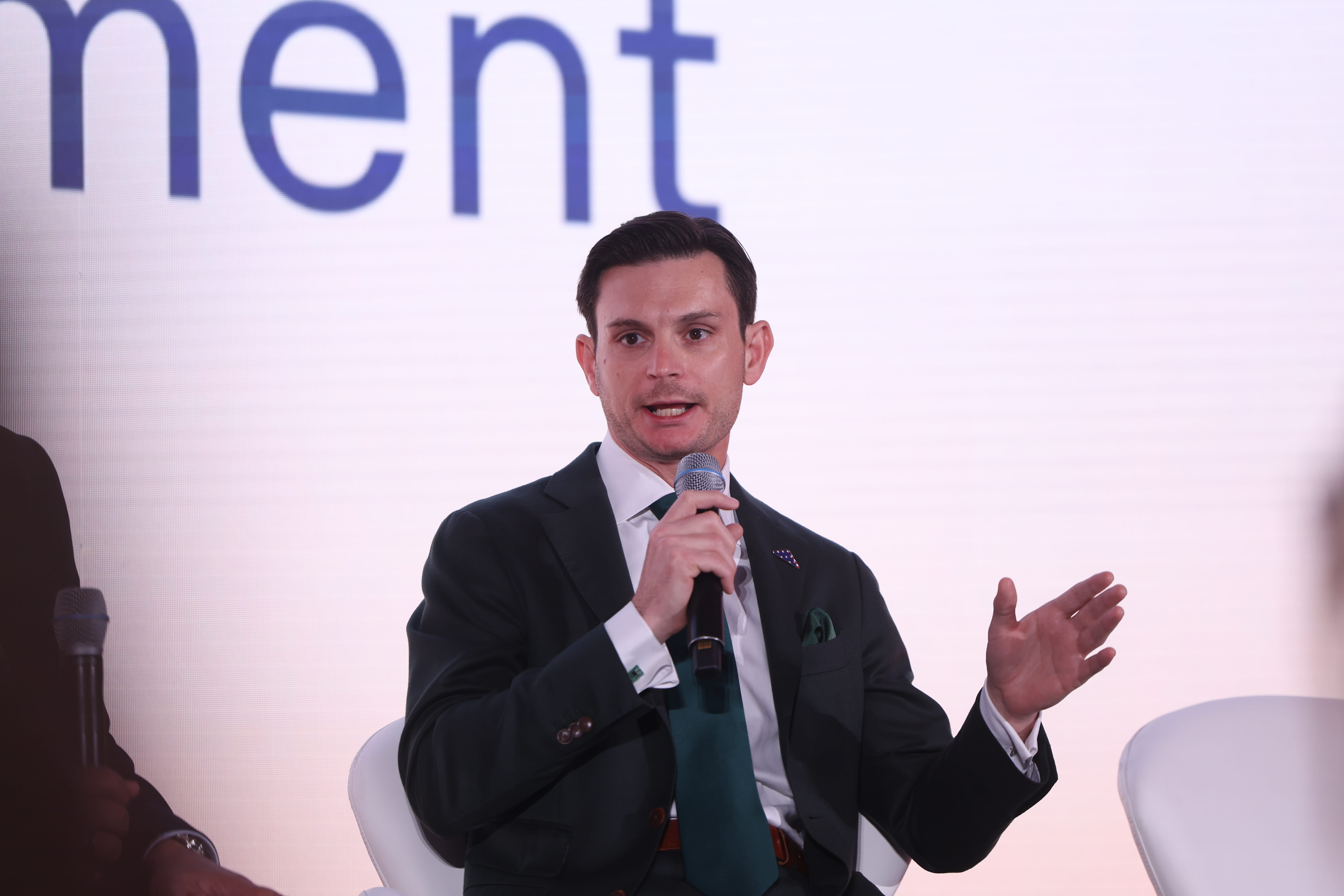
Federal Chief Information Officer Greg Barbaccia expressed measured expectations about Anthropic's Mythos model, recognizing its potential to enhance federal cyber defenses while acknowledging the significant uncertainties surrounding its performance in real-world conditions.
Barbaccia's direct exposure to Mythos has been limited to evaluations and benchmarking tests, and no federal agencies have deployed it yet. The Office of the National Cyber Director is coordinating the government's approach to the model.
Potential of AI-Assisted Cybersecurity
Barbaccia stated that the government is heading towards a world where AI defense will be able to catch up with threats. He emphasized the importance of AI defense in finding and mitigating threats, saying "we must get to a point where the bots are finding the bots."
Earlier this month, Barbaccia informed cabinet agencies that the Office of Management and Budget has started laying the groundwork for a controlled rollout of the model to federal agencies.
Mythos' Capabilities and Limitations
Anthropic has reported that the model identified thousands of previously unknown, high-severity vulnerabilities across major operating systems and web browsers during testing. However, the question remains whether these capabilities translate from controlled laboratory settings to complex, defended networks.
Barbaccia acknowledged this gap, saying "I think it'll uplevel people and make a novice cybersecurity offensive operator more efficient. But the jury is still out on how effective it'll be against real-world conditions, meaning a network that's guarded by human defenders that has alerting and things like that."
Evaluating Mythos' Effectiveness
Barbaccia pointed to the CVE catalog as one area where the model's speed could have practical value. A human analyst working through the catalog would take considerable time, while a model like Mythos could move through it far faster.
However, speed alone does not determine whether a vulnerability poses an actual threat. Barbaccia emphasized the importance of understanding the context and potential impact of a vulnerability, saying "there's a difference between something that is exploitable in a 4-nanosecond window during a BIOS boot versus what's the reality of that being exploited in the real world."
Implications for Federal Network Defenders
Mythos potentially changes the speed at which vulnerability triage can happen and the depth at which vulnerabilities can be identified before an adversary finds them. Barbaccia said the CIO Council is still in the early stages of understanding what the model could mean for enterprise security environments.
Agencies have tried to obtain access to Anthropic's model, with the Department of the Treasury requesting access and CISA, the agency responsible for securing civilian agency networks, not being granted access.
Barbaccia's cautious approach to Mythos reflects the complexity and uncertainty surrounding the model's potential impact on federal cybersecurity. As the government continues to evaluate and deploy the model, it is essential to consider both its potential benefits and limitations.
- The Office of the National Cyber Director is coordinating the government's approach to Anthropic's Mythos model.
- The model has identified thousands of previously unknown, high-severity vulnerabilities across major operating systems and web browsers during testing.
- The CVE catalog is one area where the model's speed could have practical value.
Source: CyberScoop