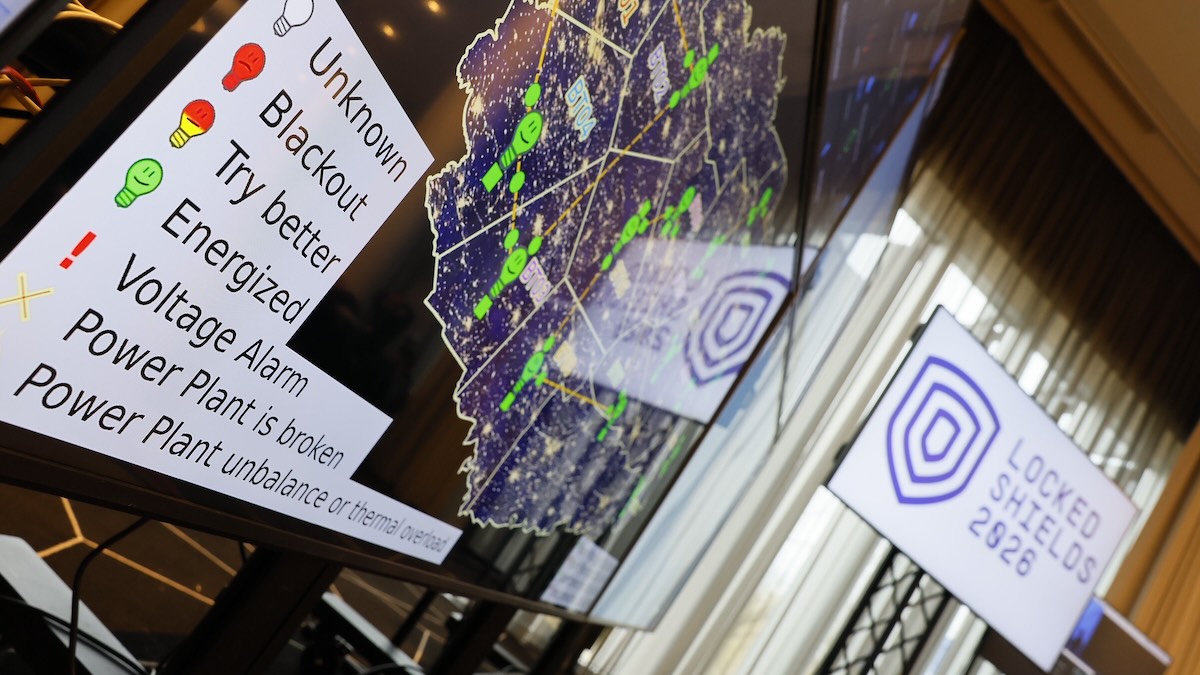
World's Largest Live-Fire Cyber Defense Exercise Concludes
Locked Shields 2026, widely recognized as the world's largest live-fire cyber defense exercise, concluded on Friday following several days of intense simulated cyberattacks targeting critical infrastructure and military systems. The exercise brought together more than 4,000 participants drawn from 41 nations — a participation level matching that of the 2025 edition — and was once again organized by the NATO Cooperative Cyber Defence Centre of Excellence (CCDCOE), headquartered in Tallinn, Estonia.
The annual exercise is designed to stress-test cyber defenders under realistic, high-pressure conditions, assessing their capacity to maintain essential services while facing coordinated and sophisticated attacks. This year's event placed defending teams in scenarios involving air defense systems, e-voting platforms, and a broad range of other critical infrastructure components.
More Than Just Technical Skills
What distinguishes Locked Shields from many other cybersecurity exercises is its deliberately multidimensional scope. Beyond evaluating pure technical proficiency, the exercise challenges participants to navigate disinformation campaigns and manage complex political pressure — conditions that closely mirror the reality of modern hybrid warfare environments.
Sixteen multinational teams competed across the event's various categories and scenarios. The top three highest-scoring joint teams — listed in no particular order by the organizers — were:
- France and Sweden
- Latvia and Singapore
- Germany, Austria, Luxembourg, and Switzerland
These standings reflect not only technical competence but also the strength of cross-border collaboration among participating nations.
Leadership Perspectives on Readiness and AI
Tõnis Saar, Director of the NATO CCDCOE, stated that participants exhibited strong capabilities in both detecting and responding to malicious activity throughout the exercise. However, Saar was emphatic that the lessons learned inside the exercise environment must be translated into concrete, real-world readiness. He specifically highlighted the growing influence of artificial intelligence, noting that AI is continuing to reshape both offensive cyber attack capabilities and defensive strategies in fundamental ways.
Exercise Director Dan Ungureanu reinforced the event's broader strategic purpose, describing its core objective as enhancing international collaboration, building trust among allied nations, and fostering a shared understanding of what resilience in cyberspace genuinely requires. In his view, exercises like Locked Shields serve as critical mechanisms for aligning doctrine, testing interoperability, and identifying gaps before they can be exploited in real conflicts.
Sixteen Years of Growth
The evolution of Locked Shields over its history is a testament to the rapidly expanding importance of cybersecurity within the NATO alliance and among partner nations. When the inaugural exercise was held back in 2010, only four nations and a modest 60 individuals took part. Today, just sixteen years later, the exercise has scaled to encompass thousands of participants across dozens of countries, reflecting how central cyber defense has become to national and collective security planning.
The growth trajectory also mirrors broader geopolitical trends. As state-sponsored cyber operations have grown more frequent and more disruptive — targeting power grids, electoral systems, military communications, and civilian infrastructure — the need for allied nations to rehearse coordinated defensive responses has become increasingly urgent.
Why Exercises Like Locked Shields Matter
Live-fire exercises of this scale offer capabilities that tabletop discussions and theoretical training simply cannot replicate. Defenders must respond to actual simulated attacks in real time, make decisions under uncertainty, coordinate with international partners whose systems and procedures may differ from their own, and do all of this while managing the reputational and political dimensions that real cyber incidents inevitably carry.
The inclusion of disinformation scenarios is particularly noteworthy. Modern adversaries rarely restrict themselves to purely technical attacks; they combine network intrusions with influence operations designed to sow confusion, erode public trust, and complicate governmental responses. Training defenders to handle both dimensions simultaneously is increasingly seen as essential.
As AI tools become more capable — both for attackers seeking to automate exploitation and for defenders attempting to identify threats at machine speed — exercises like Locked Shields will likely need to continue evolving to incorporate these dynamics. Saar's comments suggest the NATO CCDCOE is already thinking carefully about how to integrate AI-related scenarios into future editions of the exercise.
Locked Shields 2026 stands as a reminder that cyber resilience is not a product to be purchased but a capability to be continuously practiced, refined, and shared across borders.
Source: SecurityWeek