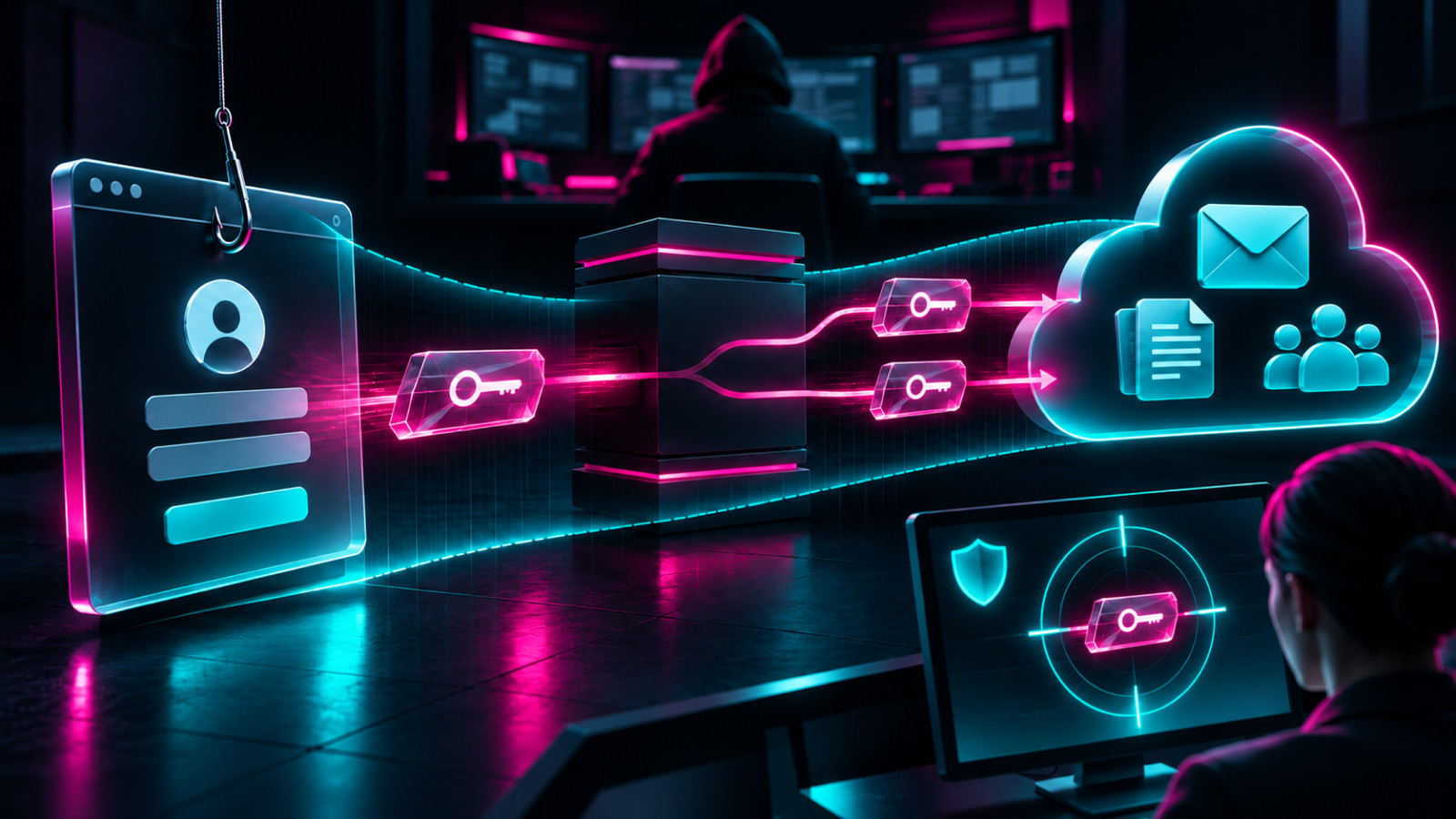
Phishing Kits Evolve Into Full-Service Platforms for Session Theft
Credential theft has long been a staple of cybercrime, but a new generation of phishing kits is shifting focus from passwords to something far more valuable: authenticated session tokens. These pre-packaged toolsets now resemble legitimate software-as-a-service (SaaS) platforms, complete with administrative dashboards, real-time credential relay, and even round-the-clock operator support. Their primary target is Microsoft 365, where a stolen token grants immediate access to email, cloud storage, and other tenant resources — without requiring the victim's username, password, or multi-factor authentication (MFA) approval a second time.
Huntress Labs researchers examined three prominent kits observed in early 2026: EvilTokens, Knight Office, and Kali365. Each employs distinct techniques to capture and replay Microsoft 365 session tokens, enabling attackers to hijack active sessions and establish persistent footholds in compromised environments.
Three Techniques That Bypass Traditional Defenses
Device Code Phishing
In a device code phishing attack, the victim authenticates directly with Microsoft's identity provider using a legitimate device authorization flow. The attacker initiates the request and captures the resulting authorization code or token, which can then be exchanged for an access token. Because the victim never enters credentials into a fake login page — instead completing a normal sign-in on a trusted Microsoft domain — the attack reduces friction and avoids many visual phishing indicators.
Adversary-in-the-Middle (AiTM) Attacks
AiTM kits like Knight Office operate as reverse proxies, relaying the authentication flow between the victim and Microsoft in real time. The victim interacts with what appears to be the genuine login page, completes any MFA prompts, and receives a valid session. Simultaneously, the attacker captures the session cookie or token issued upon successful authentication. This demonstrates that a successfully completed MFA challenge does not guarantee the resulting session is trustworthy.
Token Replay and Session Conversion
Once a token is obtained — whether through device code flows or AiTM — kits such as Kali365 automate the process of replaying it into an active Microsoft 365 session. The attacker gains immediate access to the victim's mailbox, OneDrive, SharePoint, and other cloud resources. Token theft is considered far more valuable than password theft because it bypasses the entire authentication chain, including conditional access policies that may have been satisfied during the original login.
Inside the Three Kits Targeting Microsoft 365
EvilTokens: Device Code Abuse on Railway PaaS
Discovered by Huntress in early 2026, EvilTokens leverages the device code authorization flow to harvest tokens. The kit abuses the Railway Platform-as-a-Service (PaaS) infrastructure as both a token-harvesting and replay engine, allowing operators to deploy and scale campaigns without managing their own hosting. A joint operation between Microsoft's Digital Crimes Unit and the FBI later in 2026 led to the arrest of one of its alleged operators, highlighting law enforcement's growing focus on phishing-as-a-service ecosystems.
Knight Office: AiTM With Operator Console
Knight Office functions as an adversary-in-the-middle phishing kit that steals valid Microsoft 365 session tokens and feeds them into a centralized operator console. From this dashboard, attackers can replay captured sessions and establish persistence across multiple tenant accounts. The kit's design emphasizes operational efficiency, enabling threat actors to manage numerous compromised sessions simultaneously.
Kali365: Full Phishing-as-a-Service With AI Features
The most comprehensive of the three, Kali365 bundles a complete Phishing-as-a-Service (PhaaS) operation into a single control panel. Operators can capture tokens through both device code flows and reverse-proxy lures, replay them into live Microsoft 365 sessions, maintain long-term access, and scale activity using built-in artificial intelligence features. Kali365 exemplifies the commoditization of advanced attack tradecraft, lowering the barrier for entry-level actors to achieve persistent, post-authentication compromise.
Defensive Priorities: Beyond the Phishing Lure
Huntress emphasizes that defenders must track the full attack sequence — from initial lure through authentication, token issuance or theft, device registration, and subsequent mailbox activity — to understand the scope of identity compromise. Relying on a single signal, such as a blocked phishing email, is insufficient.
Detection Signals for Stolen Sessions
- Successful sign-ins originating from unfamiliar cloud infrastructure or hosting providers
- Device code authentication flows, which are rarely used legitimately in many organizations
- Automated token refresh patterns indicative of scripted replay
- New device registrations, unfamiliar authentication methods, or anomalous mailbox activity
Response and Containment Priorities
- Address identity artifacts, not just the lure. Revoke all refresh tokens associated with the compromised identity, then remove unauthorized devices and Windows Hello credentials.
- Restrict or block device code authentication where operationally feasible, as this flow is frequently abused by kits like EvilTokens.
- Investigate mailbox access, forwarding rules, and outbound phishing launched from the compromised account to assess blast radius.
- Continue monitoring after containment. Attackers may replay tokens or re-enter the environment after the original phishing domain is taken down. Ongoing hunting is essential.
These kits help attackers walk away with persistent access, not just usernames and passwords. Defenders must shift focus from credential theft to session integrity.
Huntress Labs hosts regular Tradecraft Tuesday sessions where researchers dive deeper into attacker methodologies like those described here, offering defenders practical guidance on detection and response.
Source: BleepingComputer