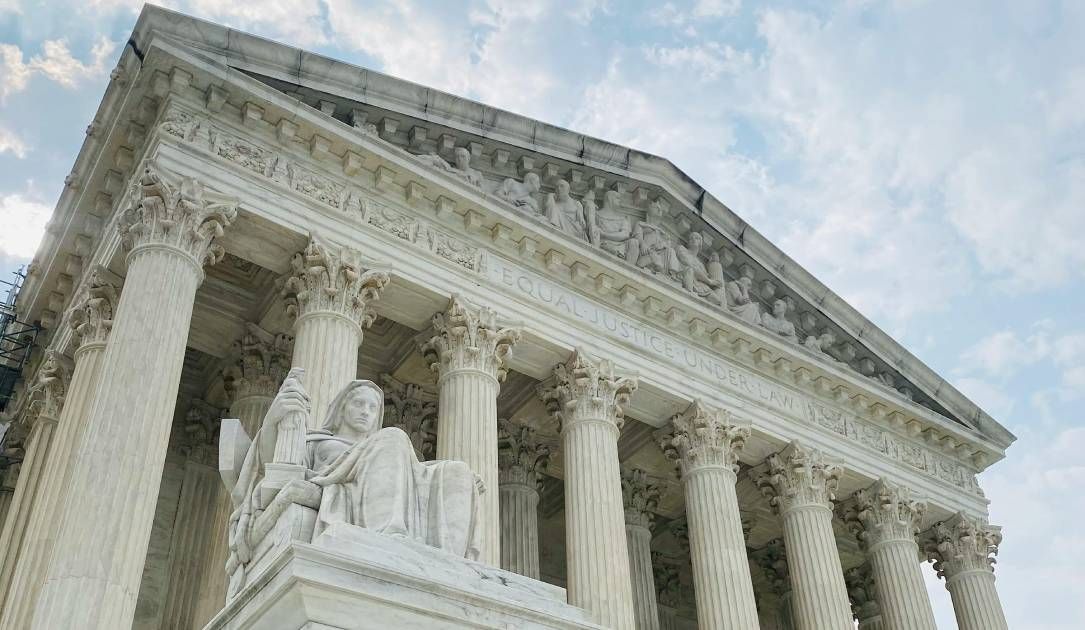
Supreme Court Decision Protects Cellphone Location Histories
The Supreme Court has made a significant ruling regarding the protection of cellphone location histories under the Fourth Amendment. In a 6-3 vote, the justices determined that police use of location history data pulled from individuals' phones by tech companies should be considered a Fourth Amendment search and requires a warrant.
The case centered on Okello Chatrie, a Virginia man who was charged with bank robbery in 2019 after police used Google location history records to identify him. Although police had a warrant for the search in this case, a lower court ruled that a warrant wasn't needed. Chatrie's lawyers challenged this contention, arguing that the search was unreasonable and should not be allowed even with a warrant.
Geofence Searches and the Fourth Amendment
Geofence searches occur when police ask tech companies to produce a list of every phone located in a particular area during a specific time frame, allowing police to pinpoint potential suspects when they have none. The Supreme Court's decision establishes that geofence searches require warrants, dealing a significant blow to the government's argument that individuals forfeit their Fourth Amendment rights when sharing information with third-party companies like Google.
According to Greg Nojeim, director of the Security and Surveillance Project at the Center for Democracy and Technology,
The court is saying that when a person uses their cellphone in the way people in modern society use a phone, they don't forfeit their Fourth Amendment rights.Nojeim added that the court is removing the foundation of the third-party doctrine, which asserts that information shared with third-party companies is no longer private.
Impact on Law Enforcement and Digital Privacy
The decision will have a significant impact on law enforcement, which sometimes does not use warrants to compel big tech companies to disclose location data. While Google no longer stores location history, other companies like Uber, Lyft, and Apple track and store user location data. Experts predict that the ruling will lead to stricter parameters for geofence warrants and a reduction in law enforcement's use of the tool.
Andrew Guthrie Ferguson, a law professor at George Washington University, stated that
Chatrie is a major win for Fourth Amendment privacy.Ferguson added that the court's decision sends a clear signal that it treats digital privacy seriously, requiring a warrant to obtain location data from cellphones and upgrading the Fourth Amendment to meet the digital age.
General Warrants and the Fourth Amendment
Chatrie's lawyer had argued that geofence searches should be considered general warrants, which are unconstitutional. General warrants allow police to search large groups of people for evidence of a crime without probable cause. The Supreme Court's decision did not entirely outlaw geofence searches but instead established that they require warrants, providing a more nuanced approach to balancing digital privacy and law enforcement needs.
The ruling marks a major victory for digital privacy, with the Supreme Court persuasively explaining why obtaining location history is a Fourth Amendment search. As the court continues to navigate the complexities of digital privacy and surveillance, this decision sets an important precedent for protecting individuals' rights in the digital age.
Source: The Record