Introduction to the Agentic Era
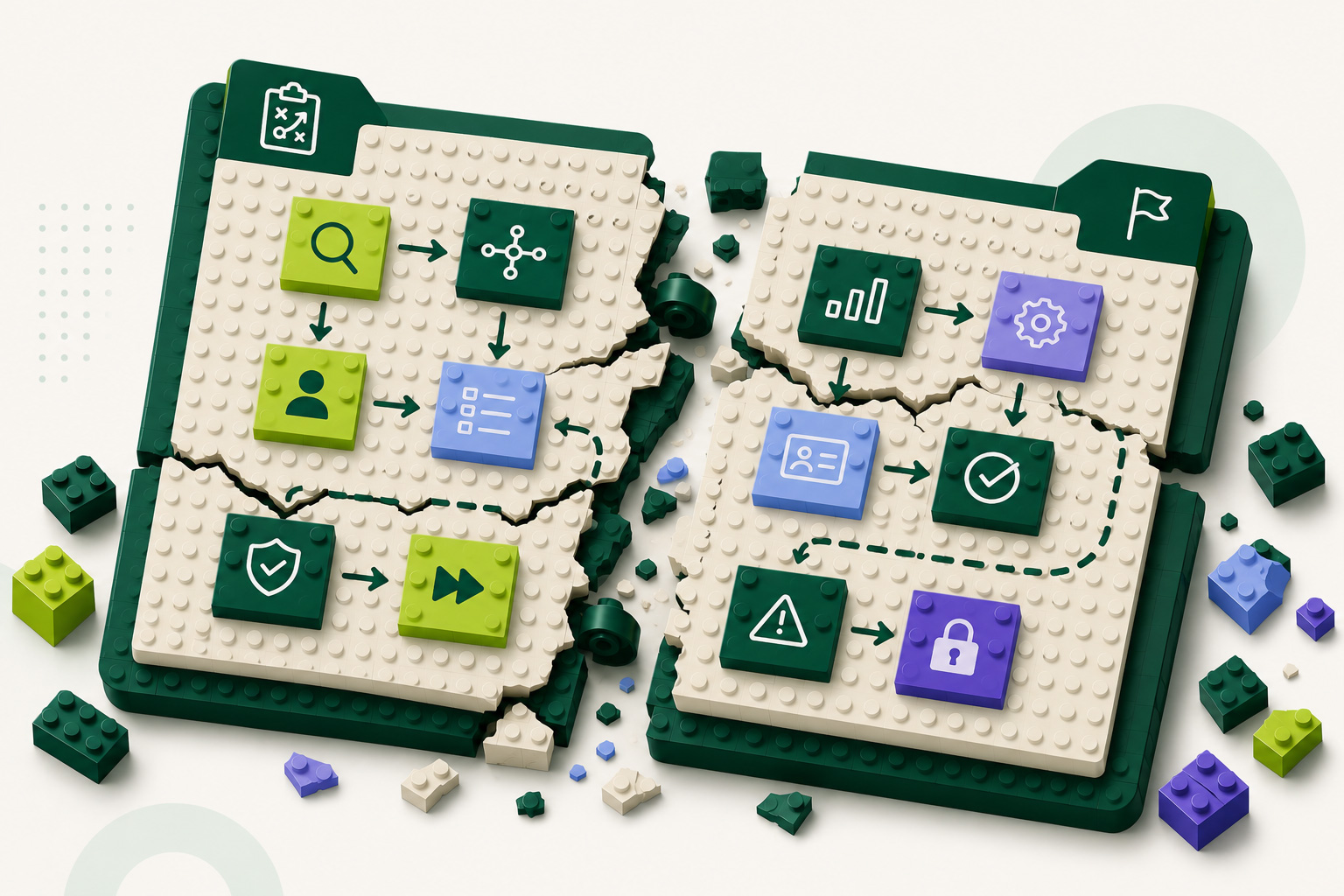
For most of the last two decades, enterprise security was based on the assumption that the environment was knowable. However, with the advent of AI agents, this assumption has been broken, and the traditional security playbook is no longer effective.
AI agents are not ordinary applications; they act autonomously, invoke tools, acquire access across systems, and change behavior based on context. They can be sanctioned or unsanctioned, and they vary enormously in what they can reach.
The Limits of Fixed Security Workflows
AI agents make environments more specific, dynamic, and harder to anticipate. While vendor-built dashboards and workflows can provide some useful insights, they are not enough to manage the complexity of AI agents.
The most important questions are often specific to a single environment, such as which agents can reach production through inherited human credentials, or what is a potential attack path from one system to another using AI agents.
These questions do not fit neatly into a generic workflow and depend on the organization's cloud footprint, SaaS stack, development practices, ownership model, compliance requirements, and AI adoption patterns.
Secure AI Without Slowing Down
Security teams need to be able to identify and mitigate risks associated with AI agents without slowing down innovation. This requires a new approach that assumes the environment will keep changing and that no vendor can prebuild every workflow.
Security teams should own the operational layer, which includes the workflows, applications, reports, reviews, and automations that reflect their specific environment. This is where differentiation lives, and where security teams can encode how their organization actually works.
Buy the Foundation to Own the Operational Layer
The future of cybersecurity is not pure build or pure buy; it is building on the right foundation. Security teams should invest in the layers that are structurally complex and widely adopted across organizations, such as continuous discovery, integrations, normalization, identity correlation, access mapping, governance controls, auditability, and secure execution boundaries.
However, security teams should own the operational layer, which requires depth, scale, and constant maintenance. This is where security teams can build on a live identity foundation and own the operational layer that must adapt to the changing environment.
Identity is the Layer that Holds
For AI agents, the foundation has to be identity. Every meaningful agent eventually requires access, and identity is the only control plane that actually governs agentic AI.
A live identity foundation gives security teams the context they need to ask and answer the questions that matter, such as who owns this agent, what is it supposed to do, which identities does it use, what systems can it reach, and does its access match its intent.
Without this foundation, custom workflows sit on sand, relying on stale exports, partial inventories, and one-off scripts. With it, security teams can build operational logic that stays connected to the real environment as agents appear, change, and disappear.
The Teams that Stay Effective
The security playbook built for a knowable environment is not coming back. AI agents have made sure of that. The next playbook is more adaptive, assuming the environment will keep changing, and that no vendor can prebuild every workflow.
The teams that stay ahead will not be the ones with the longest tool list or the most generic dashboards. They will be the ones who know which layer to own, and who can build on a live identity foundation to own the operational layer that must adapt.
In the agent era, this is how security teams move fast without losing control. If you're looking to secure your agentic AI, it's essential to find a solution that can help you build on the right foundation and own the operational layer.
Source: BleepingComputer