Autonomy on the Battlefield Is No Longer Hypothetical
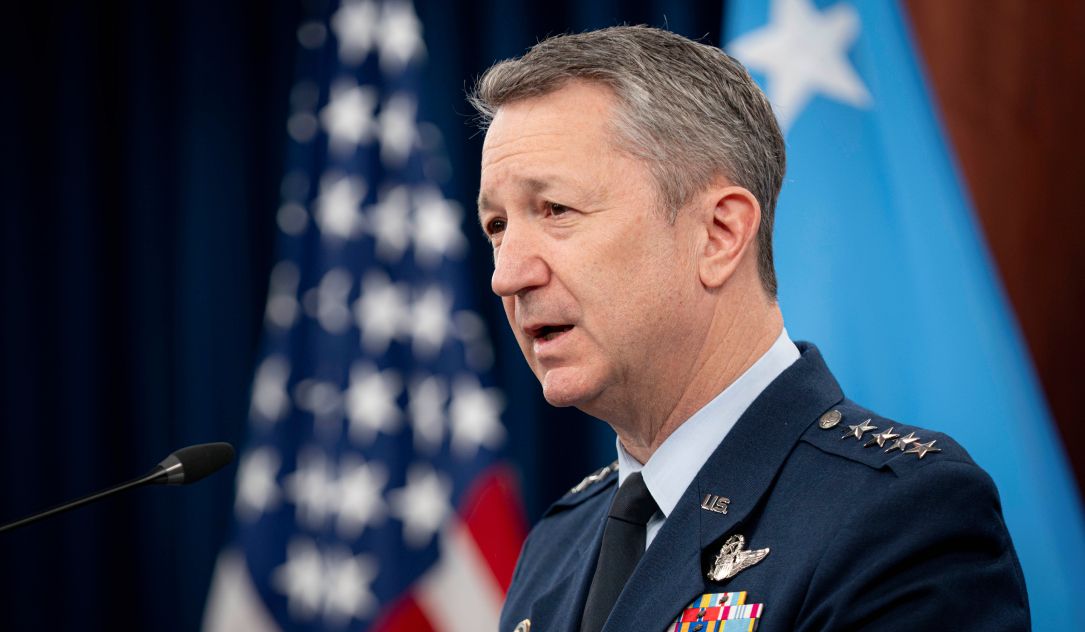
Deep inside Nashville's Vanderbilt University, at the Asness Summit on Modern Conflict and Emerging Threats, Chairman of the Joint Chiefs of Staff Gen. Dan Caine delivered a pointed message: autonomous weapons are not a distant prospect. They are going to be a "key and essential part of everything we do," he told the assembled audience, signaling a fundamental transformation in how the United States military intends to operate.
The implications extend well beyond deploying smarter drones or more responsive battlefield systems. What Gen. Caine described is a sweeping effort to construct a trusted digital infrastructure — from command-and-control networks to machine-learning models — capable of performing reliably under adversarial conditions. "We are doing a lot of thinking about this in the joint force right now," he said, pointing specifically to autonomy's expanding footprint in targeting, logistics, and battlefield coordination.
A Growing Dependence on Commercial AI
One of the most pressing complications facing the Pentagon is structural: the most sophisticated artificial intelligence being developed today is largely the product of private-sector companies whose systems were never designed with military use cases in mind. The Defense Department increasingly relies on this commercially developed software, which raises serious concerns about supply chain vulnerabilities and the potential for adversaries to exploit weaknesses in systems the military does not fully control.
Gen. Caine acknowledged this dynamic directly, noting the cultural gap that must be bridged. "Probably everybody in this room uses some flavor of a [large language model] every single day," he said. "So, we have to really normalize this and become early adopters." The comment reflected both the inevitability of AI adoption and the speed at which the military believes it must move.
The Anthropic Standoff: A Case Study in Competing Priorities
No episode has illustrated the tension between the Pentagon and the commercial AI ecosystem more sharply than a prolonged standoff with Anthropic, one of the country's leading AI research firms. The company recently chose to withhold public release of a powerful model called Mythos Preview, citing cybersecurity risks and concerns about potential misuse if widely deployed. At the same time, intelligence agencies expressed interest in the model's capabilities, and the National Security Agency was reportedly granted access to it.
Earlier this year, Anthropic declined to relax restrictions on how its systems could be used — specifically, limits governing domestic surveillance and fully autonomous weapons systems. The refusal set off a very public dispute in which the Pentagon formally designated Anthropic a "supply chain risk," a designation typically reserved for foreign vendors whose technology could introduce security vulnerabilities into government infrastructure.
The White House subsequently issued an order directing federal agencies to phase out their use of Anthropic's tools. The company challenged the move in court, and in March a federal judge temporarily blocked the ban. The government has indicated it plans to appeal that ruling. More recently, President Donald Trump suggested the conflict may be softening, saying Anthropic is "shaping up" and could "be of great use."
The episode exposed a deeper, unresolved tension: the United States is racing to adopt AI for national security purposes while depending on a commercial ecosystem that operates under fundamentally different assumptions about risk tolerance and control.
Security Risks That Are No Longer Theoretical
For military planners, the concern is not merely whether AI systems can process information faster or make better decisions than human operators. The question is whether those systems can be hardened against manipulation, data poisoning, or unpredictable behavior when the stakes are highest.
These are no longer abstract concerns. Lawmakers have already pressed the Pentagon for answers about whether AI systems played a role in a deadly strike on an Iranian school during the opening hours of the U.S.-Israel war against Iran — raising urgent questions about how such tools are tested, audited, and governed before they are deployed in combat conditions.
- Data poisoning: Adversaries could corrupt training data to manipulate AI decision-making in the field.
- Model manipulation: Subtle alterations to AI models could cause unintended or adversary-favorable behavior.
- Accountability gaps: When AI systems fail or cause harm, unclear contractual responsibility can leave critical questions unanswered.
- Supply chain risks: Commercially developed tools not designed for military environments may harbor vulnerabilities.
Procurement Rules Are Lagging Behind the Technology
Gen. Caine also identified the Pentagon's own bureaucratic machinery as a significant obstacle. The government's procurement system, he argued, was built for a different era — one defined by fixed hardware platforms with predictable lifecycles. Software, and especially AI, does not work that way. "We have to write better contracts," he said bluntly.
Current acquisition frameworks struggle to accommodate software that evolves continuously and requires ongoing security updates. Contracts structured around static deliverables can slow the deployment of critical technologies and, more dangerously, create ambiguity about who is responsible when something goes wrong. In an AI-enabled operational environment, that ambiguity carries direct consequences.
Caine proposed that contracts be restructured to distribute risk between the government and private-sector partners, with a shared goal of ensuring that systems are not only operationally effective but resilient against failure, attack, and exploitation.
Trust as the Central Problem
As the Pentagon accelerates its push into AI-enabled warfare, the fundamental challenge is shifting. It is no longer primarily a question of whether the technology works. The harder question — and the one that will define military AI policy for years to come — is whether these systems can be trusted, secured, and kept under meaningful human control in environments where errors can be lethal and irreversible.
The margin for error in combat is, as Gen. Caine's remarks implicitly acknowledged, vanishingly small. Building AI that performs reliably within those constraints, while navigating a fractious relationship with the commercial sector that produces it, may be the defining security challenge of this decade.
Source: The Record