A Bank Robbery Case With Sweeping Privacy Implications
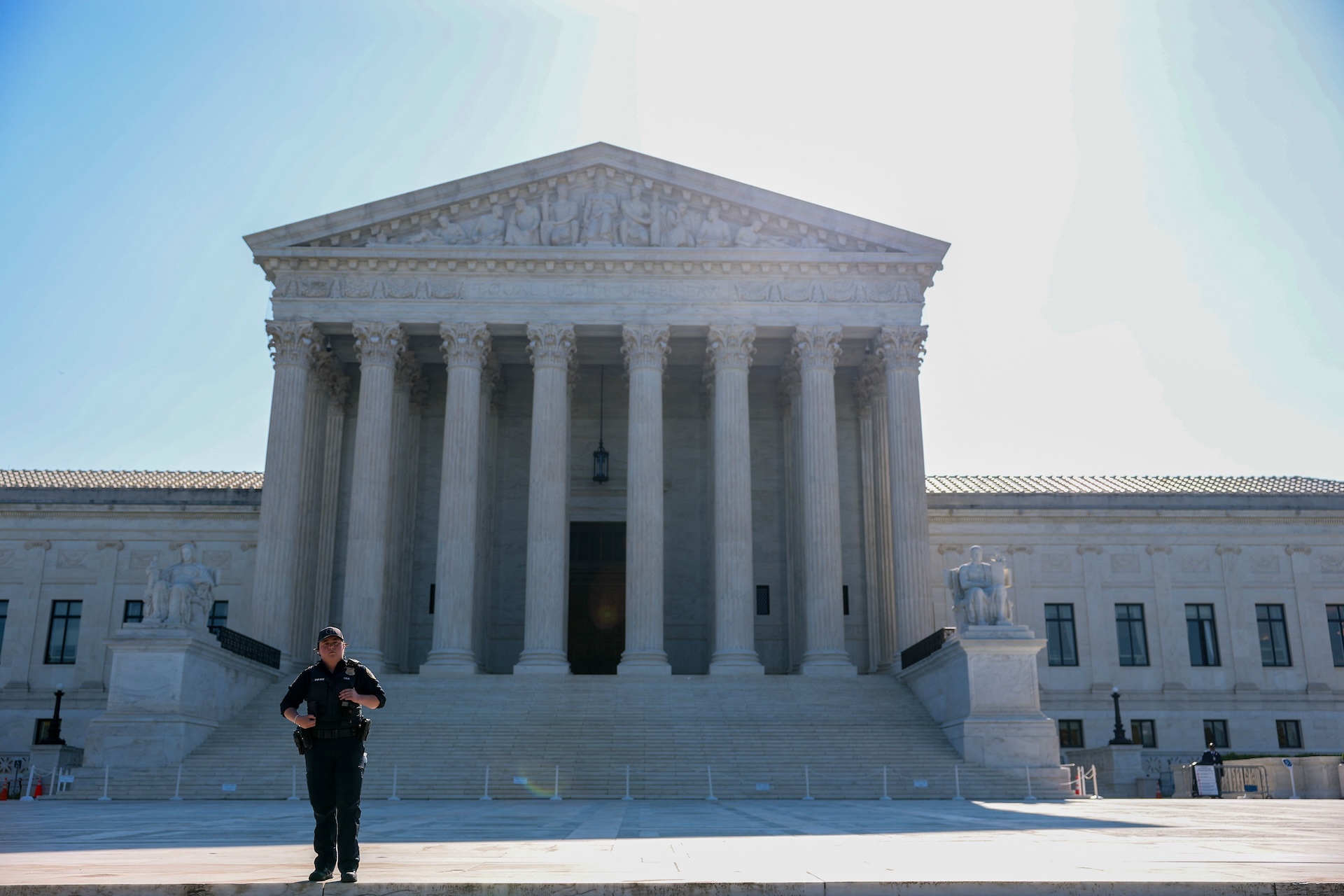
The Supreme Court heard oral arguments Monday in Chatrie v. The United States, a case that originated from the 2019 conviction of Okello Chatrie for bank robbery. Investigators in that case obtained location data from Google covering individuals within a defined geographic area during a specific window of time — a technique known as a geofence warrant. The outcome of the Supreme Court's review could set major precedent for how far law enforcement can go in collecting Americans' digital data.
The session ran for an unusually long two hours, with justices on both the conservative and liberal wings of the court raising pointed questions about the constitutional limits of bulk location data requests. A ruling is expected in June or July.
Conservative Justices Question the Opt-In Argument
Several conservative justices, including Chief Justice John Roberts, challenged Adam Unikowsky, the attorney arguing on behalf of petitioner Chatrie. Their central question: why should the government be barred from accessing location data that a user had voluntarily opted into sharing with a third party like Google?
Unikowsky pushed back firmly.
"I just don't agree that one should have to flip off one's location history as well as other cloud services to avoid government surveillance,"he said, extending the argument to ask whether the government would then also be entitled to access emails or calendar data stored in the cloud. Notably, Google has since moved location history data from its own servers to users' individual devices, a development that adds further complexity to the legal landscape.
Liberal Justices Also Express Doubts
Liberal justices were not without their own skepticism toward Unikowsky's position. Justice Sonia Sotomayor acknowledged that geofence warrants are not entirely open-ended, noting that they identify a specific place, a specific crime, and a limited time frame.
"So it's not a general warrant in this historical sense,"she said, referencing the Fourth Amendment's protections against broad, indiscriminate searches.
However, Sotomayor also highlighted a core concern with location data in particular. Because such data follows users wherever they go, she pointed out,
"When the police are searching or asking for a search result, there's no way to predict whether they're going to invade your privacy."
Government's Turn Under the Microscope
When the government presented its arguments, justices continued probing the boundaries of bulk data collection. They questioned what, if anything, distinguished emails or calendar records from location data, and whether law enforcement could conduct a physical search of every locker in a storage facility on the chance that one might contain a gun they suspected was there. The analogy put pressure on the government to articulate a principled limit on its ability to sweep broadly through third-party data stores.
Justice Alito's Notably Strong Signal
While predicting a court's decision from oral arguments is notoriously unreliable, Justice Samuel Alito offered one of the session's clearest hints about his thinking. He questioned why the court had taken the case at all.
"I'm struggling to understand why we are here in this case, other than the fact that at least four of us voted to take it,"he said during questioning of Unikowsky, adding that he did not believe anything meaningfully new could emerge from the court given existing lower court rulings.
"We are all free to write law review articles on this fascinating subject, but that seems like that's what you're asking for,"Alito remarked.
Legal Experts Weigh In
Orin Kerr, a law professor at Stanford University who filed a friend of the court brief on the government's side, said he walked away from the arguments believing the court will ultimately rule that geofence warrants can be drafted in a constitutionally lawful manner.
"The Justices seem likely to reject the broader argument Chatrie made about the lawfulness of the warrant,"Kerr wrote on social media.
"They'll probably say the geofence warrants have to be limited in time and space."
Casey Waughn, a privacy lawyer and senior associate at Armstrong Teasdale, noted that the session was striking for how little attention was paid to the so-called "third-party doctrine" — the legal principle holding that citizens surrender their expectation of privacy when they voluntarily share information with an outside entity, such as a bank. She also analyzed Unikowsky's dual-track legal strategy.
"His argument really gave two lines to go down for the judges, and one was that you have a property interest in your data on the cloud, and the other was that you have a reasonable expectation of privacy for your data on the cloud,"Waughn told CyberScoop. She added that both avenues have historically served as grounds for the Court to find Fourth Amendment protections, making it a deliberate and noteworthy choice for Unikowsky to argue both simultaneously.
Privacy Advocates Sound the Alarm
Alan Butler, executive director of the Electronic Privacy Information Center, which filed a friend of the court brief on behalf of the petitioner, emphasized the broader stakes at play. In a statement released after arguments concluded, he said the case sits at the intersection of fundamental constitutional rights and modern digital life.
"Today's arguments underscored that the Supreme Court is weighing one of the most consequential privacy questions of the digital age: whether the government can use sweeping location data searches to identify a suspect,"Butler said. He called on the Court to hold that the Constitution protects digital data even when stored by an app or cloud provider, and to require particularized suspicion and close judicial oversight before such records can be obtained.
What Comes Next
With a decision anticipated no earlier than June and potentially as late as July, the court's eventual ruling in Chatrie v. United States will likely define the constitutional guardrails — or the lack thereof — around geofence warrants and government access to cloud-stored data for years to come. The implications stretch well beyond this single robbery case, touching on the privacy of millions of Americans whose phones continuously generate the kind of sensitive location records at issue in the proceedings.
Source: CyberScoop